σημειωσεις

Ἀπό έναν διάλογο μεταξύ Ἀντόρνο καί Μπλόχ ὅπου σημειώνω ἕνα ἀπόσπασμα τοῦ Μπλόχ περί τῆς ἔννοιας τῆς δυνατότητας. Τό βρῆκα στό flickr τοῦ Πέτρου Φωκαϊδη.


Ἡ ἐπίσκεψη εἶναι ἰδιαίτερη διαδικασία πού, κατά πρῶτον, ὑφαρπάζει ἀπό τό περιβάλλον τόν τόπο καί δεύτερον παράγει στό ἐσωτερικό τοῦ τόπου, πού δέν φαίνεται, στό κρυμμένο του κομμάτι, κάποια ἀλλαγή καθοριστική ἡ ὁποία μπορεῖ νά σχεδιαστεῖ καί νά ἀναπαραχθεῖ. Εἶναι μιά εἰκονική προβολή, μιά σύνδεση εἰκόνων τῆς ἐξωτερικῆς εἰκόνας πού παρουσιάζει τό προσφερόμενο θέμα καί τῆς ἐσωτερικῆς εἰκόνας πού ἐπισυνάπτεται.

Ἄς φανταστοῦμε τήν δυνατότητα τοῦ κτίσματος νά ἦταν κάπως ἔτσι στό ἐσωτερικό του. Τό κτίσμα ἦταν τό δικό μου κτίσμα καί τό ἐσωτερικό ἕνα δικό μου δοκίμιο πού εἶχα ὑπογράψει πολλά χρόνια πρίν σέ κάποια ἀνακοίνωση γιά ἕνα συνέδριο στήν Ἰταλία.

Κάποιο γιαπί ἤ κάποια οἰκοδομή ἀλλά ὄχι σκέφτηκα, εἶναι κάτι τελειωμένο και ἐπί πλέον εἶναι τελειωμένο μόνον ἐπειδή ἐμένα μοῦ φαίνεται τελειωμένο (κανείς ἄλλος ἴσως δέν θα΄τό πρόσεχε καί δέν θά πίστευε ὅτι αὐτό εἶναι τελειωμένο). Ἔτσι αὐτό δέν εἶναι κάτι ἁπλῶς δικό μου, το ὑπογράφω βέβαια καί διεκδικῶ γιά αὐτό τήν πατρότητά του στήν παρουσίασή του, ἀλλά ἐπίσης εἶναι ἴσως ἡ ἴδια ἡ εἰκόνα του ἑαυτοῦ μου, το κτίσμα αὐτό. Το κτίσμα βεβαιώνει ὅτι ὄντως ἐγώ εἶμαι κάποιος ἀφοῦ αὐτό τό βλέπω ὡς τελειωμένο καί πολύ σημαντικό ἐνῶ πιθανόν οἱ ἄλλοι πού περνᾶνε δίπλα του δέν τοῦ δίνουν σημασία. Μπορεῖ νά συνοδεύεται από κάποιο κείμενο που εκφράζει μέ λόγο και καθαρότητα τήν ἴδια εὔρεση στόν τόπο καί νά λέει ἀπό τήν ἀρχή ὅτι αὐτό τό μέρος μάλιστα εἶναι κάποιο καταπληκτικό μέρος καί νά ἀναρωτιέται γιατί εἶναι καταπληκτικό καί νά θέτει τό ἐρώτημα καί νά δίνει καί ἀπαντήσεις καί νά συμβαίνουν ὅλα αὐτά παράλληλα καί νά φτάνω στό δεύτερο σχέδιο καί νά ἀναρωτιέμαι γιά τήν τέχνη καί γιά τήν κατάληξή της καί νά ἀπορῶ καί νά ἐπανατοποθετῶ τό πρόβλημα συνολικά καί νά προχωρῶ σέ νέες λύσεις σάν νά παρακολουθῶ τήν διαδικασία τῆς σκέψης ἀπέναντι σέ αὐτό καί τήν μορφοποίησή του σέ ἔργο ἐνῶ μπορεῖ νά εἶναι ἔργο μόνο τό ἴδιο.


η κατασκευη της επισκεψης


Ἦταν ἀπόγεμα, αὐτό θυμᾶμαι, πλησίασα στό μέρος ἀπό πάνω, ἀπό τόν δρόμο. Δέν ἤμουν μόνος, ἄν μπορῶ νά τό πῶ αὐτό, ὡστόσο πράγματι δέν ἤμουν μόνος, (ἄν μέ ἔβλεπε κανείς ἀπό κάπου θά ἔβλεπε ὅτι δέν ἤμουν μόνος, ἦταν μαζί τά παιδιά μου) καί ἔκανε κρύο. Ἔκανε κρύο γιατί ἦταν Χριστούγεννα καί αὐτό βέβαια ἔχει σημασία γιατί Χριστούγεννα στό Πήλιο θά μποροῦσε νά εἶχε χιονίσει ἀλλά ὄχι: δέν εἶχε χιονίσει, δέν ἦταν ὅλα σκεπασμένα από τό χιόνι καί ἔτσι μπόρεσα νά δῶ κάτω καί νά καταλάβω ὅτι αὐτό πού ἔβλεπα ἦταν κτίσμα. Ξεχώρισα τό κτίσμα γιατί δέν εἶχε χιονίσει. Ὅταν χιονίζει στά Χάνια δέν βλέπει κανείς τίποτε καί μάλιστα ἡ μορφή τοῦ κτίσματος ίσως έχει σχέση με αυτό. Σκέφτηκα ότι τό κτίσμα πού φωτογράφιζα ἐπειδή ἦταν τόσο ίδιαίτερο καί ταυτόχρονα μᾶλλον ἀσήμαντο ἦταν ἴσως κάποιο ὑπόγειο προορισμένο γιά νά περιλάβει μεγάλα καζάνια μέ πετρέλαιο πού θά καίει συνέχεια γιά νά ζεσταίνει χώρους πού θά φτιαχτοῦν ἀπό πάνω ἀπό αὐτό, τούς ἀπαίσιους σίγουρα χώρους πού θά εἶναι ὅμως ζεστοί καί εὐρύχωροι ἔτσι, ὥστε νά χωρᾶνε μέσα τους δυστυχισμένες οἱκογένειες πού θά περνᾶνε τίς διακοπές τους ἐκεῖ στό πήλιο καί θά ἀποφεύγουν ἔτσι τήν καταστροφή τους ή θα διασκεδάζουν τήν κατάθλιψή τους. Σκέφτηκα ὅτι τό οἰκοδόμημα σέ ἐκείνη τήν περιοχή σίγουρα θά προοριζόταν νά γίνει ξενοδοχεῖο. Ἤ θά ἦταν κάποια ὑδατοδεξαμενή. Λίγη σημασία εἶχε ποιός ἦταν ὁ προορισμός γιά αὐτό τό οἰκοδόμημα. Ἦταν ἕνα σπίτι που τό εἶχα φτιάξει καί βρισκόταν ἤδη ἐκεῖ χωρίς να κουνήσω καθόλου τό χέρι μου. Τό μόνο πού ἔμενε ἦταν νά τό σχεδιάσω.

Ἄν καί Χριστούγεννα λοιπόν εἶδα τό κτίσμα ἐπειδή δέν εἶχε χιονίσει καί ἔμεινα χωρίς φωνή σκεφτόμουν κάτι πολύ ισχυρό καί ἐνῶ ὑπῆρχαν δίπλα μου τά παιδιά μου δέν ἤξερα τί νά πῶ. Τό φωτογράφισα καί δέν φωτογράφισα βέβαια τό κτίσμα ὅπως φωτογραφίζω τή θάλασσα ἤ κάτι ἄλλο πού ἁπλῶς κάτι μοῦ κινεῖ τό ἐνδιαφέρον. Φωτογράφισα τό κτίσμα πού μοῦ άνῆκε. Ἔβλεπα ὑλοποιημένο κάτι πού ἔπρεπε νά εἶχα κάνει παλιά, τελειωμένο καί μάλιστα ἤδη διαβρωμένο ἀπό τόν χρόνο. Τό γιαπί ἔμοιαζε μέ ἐρείπιο κτίσματος πού σχεδιάσα ἐγώ στό παρελθόν καί τό ἔβλεπα τώρα μπροστά μου, κάπως σάν νά ὀνειρευόμουν.

inhabited water reservoir

Ἄν ἄφηνα τήν ἐντύπωση αὐτή νά παρέλθει τότε θά ἔχανα αὐτό πού βρῆκα θά ἔχανα δηλαδή ἕνα εὔρημα καί ἐπίσης θά ἔχανα τό κτίσμα μου.

Ἡ ερεση δεξαμενς στήν περιοχή Χάνια το Πηλίου ποτελε φετηρία γιά τόν σχεδιασμό γκατάστασης πού λαμβάνει πψιν της τά διαφράγματα τς δεξαμενς καί πιχειρε νά κατασκευάσει πό ατά βιώσιμους πόγειους χώρους. πόγεια κατοικία εναι μοναχικός τόπος γκατάστασης στό λεκτρονικό δίκτυο, παρέχει να μοντέλο κατοίκησης στό σωτερικό το δικτύου πού θυμίζει καταφύγιο στό δίκτυο λλά καί φυλακή.
Finding a water reservoir in the area of Chania on Mount Pelion is the starting point for the design of an installation that takes into account the internal partitions of the reservoir and attempts to build livable underground spaces afer them. The underground dwelling is a solitary space of inhabiting the web, provides for a model of residing within it, that resembles a refuge in the web, but also a prison.


net house

The condition of living in a ruin of a house and staying in the Internet condition in a net-house on line and aiming the idea of a new urbanity described by the new country house.

Η κατοίκηση της δεξαμενής

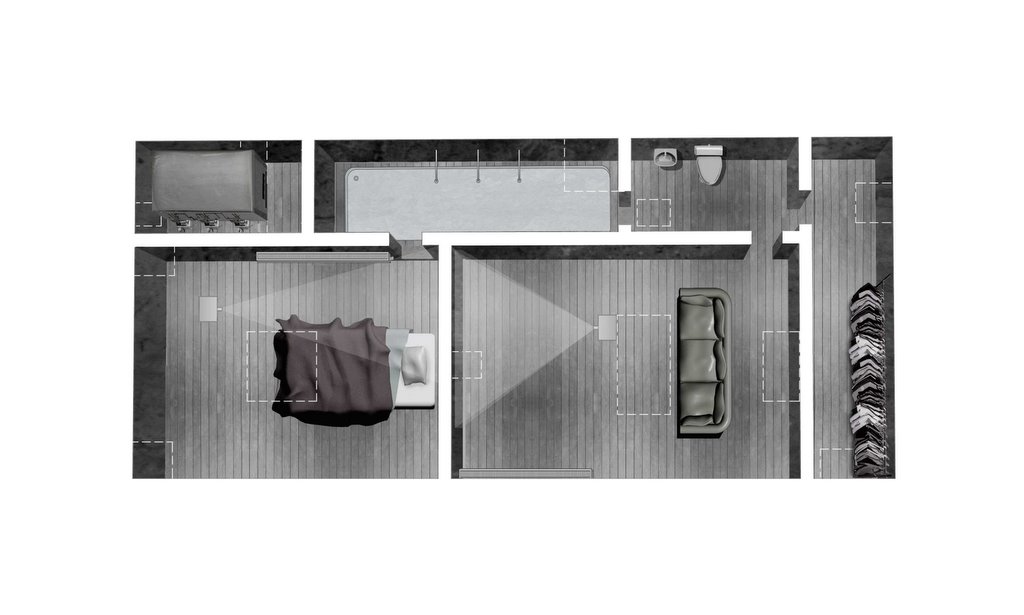
Σε υφιστάμενη, εγκατελειμμένη, υπό ανέγερση δεξαμενή σχεδιάζεται ιδιαίτερη κατοικία με λουτρό, αποθήκη, χώρο ύπνου και προβολών. Check the fake house 2 in flickr

view of the water deposit

detection of the finding

object in landscape

existing structure

on the concept of "find"

A written essay regarding architecture engenders intellectual occupancies of the particular space which – at that particular time – architecture regards as properly its own. Any opinion that is organized around an edifice seeks to breach it in a particular way so as to install therein a machine for habitation by means of thought. Thus we look at architecture in the manner we build, whereas we write about it in the manner we dwell. We argue that a building may be construed in this manner or that, and we mean by this that it may be inhabited in this or that manner. We often deem a work of architecture to exist incipiently, and it is only later on – once we have taken notice of its interior – that we stumble upon its own proper meaning. We fondly imagine that we are deciphering, that we are taking something by storm that was just lurking within the ‘innards’ of an edifice. Even so, any such decipherment also constitutes a constructional investment that foists some new system upon a previous one. Each such decipherment engenders some kind of appurtenance, in such a way as to render meaningless the quibble about what is more important in the act of decipherment: the veiled meaning or the process of producing it. The work actually needs the instauration upon it of a new system providing the locus for appended ‘elucidations’. An essay on architecture consumes itself in a bid to achieve occupancy of private space, to dwell there where the energy of interpretation may be accommodated. It is not so much an accommodation of the energy originating from the project qua project, but rather an acquiescence to a foisted meaning, as confirmation of the unity (that may be only ascertained ex post) formed by the edifice in question and the discourse that is offered accommodation inside the edifice. An essay on a work of architecture accomplishes a certain tentative annexation of a new limb to the body of the edifice under consideration. Discourse is installed in architecture, a fact that allows the edifice to stand as a permanent stage, where the discourse in question may take up lodging, as tenants occupy a house, without incurring any definitive alterations to its space, such that would turn it into something other than it is , but merely by constructing their own abode out of that fixed space .
As we hold on to this notion, we can stage tentative approaches that shall be concerned with the ‘literal’ aspect of such occupancies: ‘literal’ yet not divorced from certain metaphorical implications. We envision such an essay in as utterly plain and playful terms as possible. A certain notion of ‘built essay’ could conceive the intellectual effort aimed at such tentative transformations of an edifice: how would it be possible for such an essay to become another kind of inscription on the edifice? Our goal is an intervention organized at the level of the intellect, not one indulging in a disquisition on the representational features of the building, but one that would alter those representational features in order to attempt some other installation. Such a strategy could aim at a tentative architectural act, an attempt at occupancy: not only in organizing a proposal to be installed, but also in formulating something. An opportunity would be thereby afforded to discourse (which distorts so as to construct an interpretation) of acting on the images themselves and on the plans of the buildings. The buildings would thus be treated as finds, and the interventions upon them would be tests, where the buildings would serve as raw materials, and the tests would engulf the buildings in order to produce something from them. Preparatory work for various such installations would test the amenability of the building to particular occupancies.
When does an edifice become a find worthy of theoretical installations? I know not the answer. We usually hold that an answer to this question is given implicitly, as a matter of course. What deserves to be investigated is usually put forth or not as the case may be, depending on the ease with which a community can formed around it, a community based on common interests. What is thereby precluded is the likelihood of encounters with buildings (whatever their sort) that would be governed by the unfeigned fascination deriving from some indefinable personal attraction. Why do we become interested in this or that person? How do such persons succeed in occupying a significant part of our field of vision? How important are other people’s opinions about those persons? How do we endeavour to install ourselves within them, or to construe them according to our predilections? An edifice may be the setting of an encounter. ‘How is one to approach the landscape that is no longer what one sees, but has conversely become the landscape in which one is seen by others?’

We are seeking for the convention that establishes the thing that is there, right in front of us, as a find. For the purposes of this essay, there are two distinct definitions that can be ascribed to the notion of a find, namely the beautiful and the insignificant. Under those two, any given edifice may be construed as a function of the gaze that is intent upon it.
I hasten to look up Schiller’s correspondence. I believe that the beautiful for Schiller is a find. As Xiropaïdis points out in his appendix to the Greek edition, it presents itself as the ‘experience of a certain recognition’ . It points the way to what I was in quest of, and calling for: the way for my eventual return to it. And the beautiful is also the place in which the ‘unitary inception of theory and practice’ is revealed . It manifests ‘freedom within the field of appearances’ . If we insist in postulating that the ‘find’ stages a certain tentative occupancy, we might observe one other thing, along with Schiller: contemplation and consolidation of the locus of installation calls for a certain decisiveness of vision that matches Schiller’s freedom within the field of appearances. Schiller’s thoughts about the beautiful afford a way for the find to be constructed.
However, for a built essay, for an installation that extends its text to the locus of the find, a further thought must be entertained; a thought that will call for the rupture of autonomy wherein the beautiful is presented in Schiller’s discourse. According to Schiller the beautiful appears to obey its own law solely: throughout his passages on the ‘beautiful’ one may discern in the discourse a certain palpable momentum towards a union with the perceptible. In the ‘beautiful’ is borne out the enduring grief of the perceptible within discourse, and of discourse within the perceptible.
The occupancy of the find with which we are now concerned calls for some further work on the notional unity of that which is perceptible and intelligible in the beautiful as understood by Schiller. We seek to expand our tentative rationale with meanings that are moulded by design: by the booming rational reverberation engendered in the manipulation of the image, or by means of plans for a project ‘on the drawing board’. And going beyond that: the find, in the specific work of tentative occupancy, arranges instances of monumentalized insignificance. A phrase from Lewis Mumford’s Art and Technics springs to mind: ‘it is by far deadlier for a piece of architecture to become ideologically obsolete than technically so. Once a building has lost its meaning, we cease to perceive it though it still remains upright.’ The find which lends itself to such occupancies is organized by means of insignificant material. From the material of such insignificance, described by Mumford, some new archaeology may be developed. ‘To see what we cease to see’. Just like any other archaeology, it can look to recover nothing else save than that which keeps receding into the past, the thing that eludes it. The find founders in the contradiction of a dual motion: one that seeks after the insignificant yet, once it has chosen it, incurs its loss.